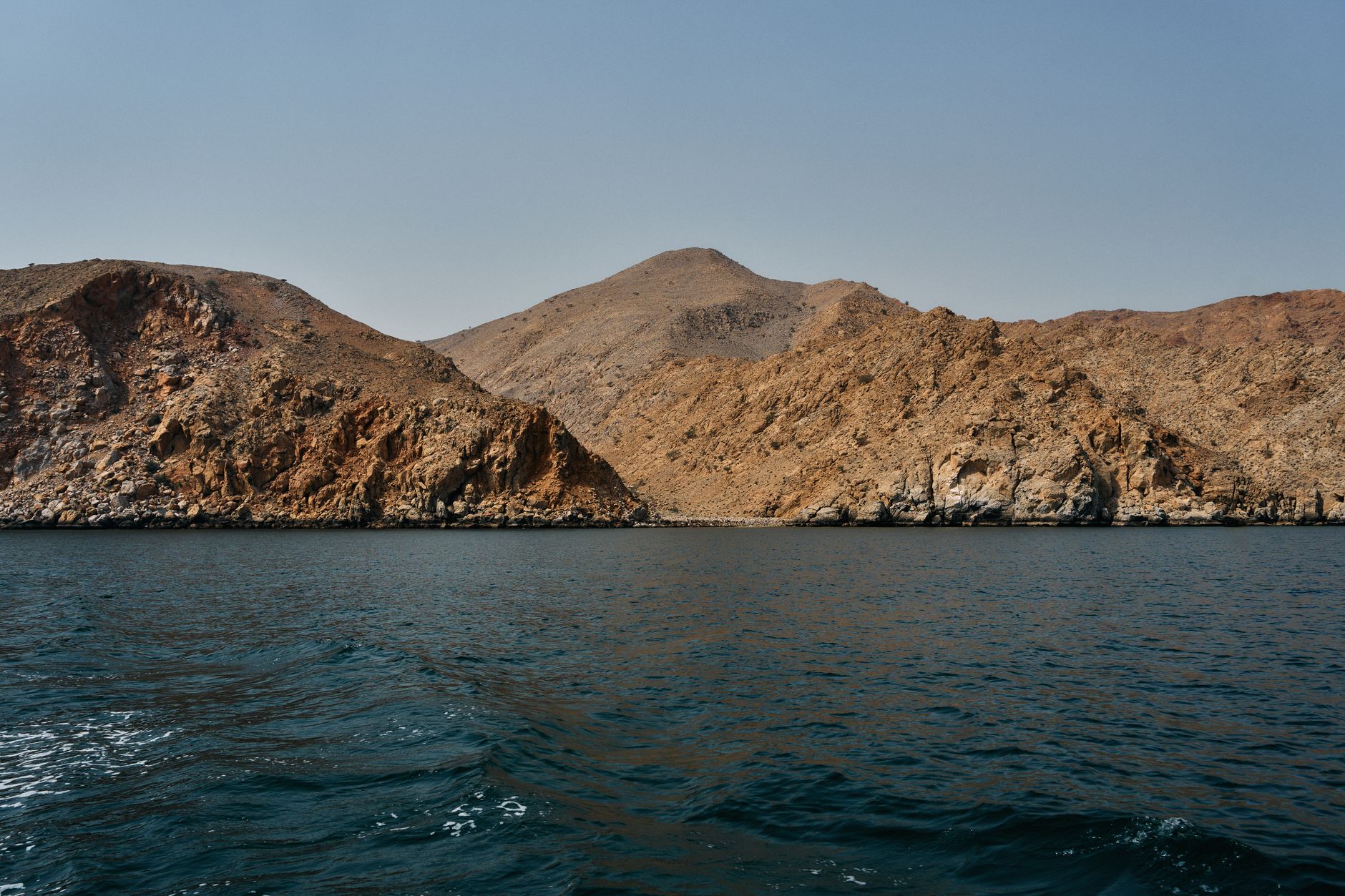
Unlike most fertilizer producers in the Persian Gulf, OMIFCO benefited from its location on Oman's southeastern coast. The company's production complex in Sur is outside the Strait of Hormuz, enabling uninterrupted exports while producers in Qatar, Saudi Arabia, the United Arab Emirates, and Kuwait faced significant logistical disruptions.
That geographic fact is not incidental to the investment case. It is the investment case. When the strait tightened,
global urea and ammonia prices surged, tightening supplies and raising nitrogen benchmarks to multi-year highs.
OMIFCO sat on the right side of that bottleneck.
The physical reality of the company's operations supports the argument.
In 2025, the company produced 1.35 million tonnes of ammonia and 2.07 million tonnes of urea, operating above nameplate capacity for both products despite challenging geopolitical conditions.
That is a meaningful operational fact. Running above nameplate capacity during a period of regional conflict and logistical disruption is not something that happens by accident. It reflects a feedstock supply chain that remained intact while competitors were scrambling to reroute shipments.
The feedstock story is where the analysis gets more nuanced.
As OMIFCO prepared to open its initial public offering to investors, one of the most important elements behind the company's profitability lay outside the share offer itself: a long-term natural gas supply agreement with the Government of Oman, signed in September 2025 and effective from July 15, 2025, which commits the company to a minimum gas purchase obligation estimated at around $3.9 billion over ten years.
That number deserves to be read carefully. A $3.9 billion minimum purchase obligation is not a flexible arrangement. It is a structural cost commitment that locks in both the floor of OMIFCO's cost base and the ceiling of its feedstock security.
The agreement provides 58.765 million MMBtu annually at a base price of $5.25 per MMBtu, with prices increasing by 3% annually on a compounded basis, rising to approximately $5.41 per MMBtu for 2026.
The cost impact of the new arrangement is already visible in the accounts.
OMIFCO's annual gas cost rose from RO 83.3 million in 2024 to RO 101.2 million in 2025, an increase of about 22 percent.
That is a material step-up. But the structural context matters enormously here.
Despite the increase, OMIFCO continues to benefit from a significant feedstock advantage compared with many international fertilizer producers. In markets such as India and Europe, fertilizer producers are often exposed to higher LNG-linked or market-based gas prices, giving OMIFCO a structural cost advantage in the global urea market, particularly when gas prices remain elevated in importing regions.
The Indian market is the commercial anchor of this entire story.
India remains central to OMIFCO's export strategy and is expected to be its largest customer for the foreseeable future. Under a revised marketing arrangement that became effective in February 2026, OQ Trading will supply one million tonnes of urea annually under India's government procurement program, with plans to market an additional 500,000 tonnes each year through commercial sales into the Indian market.
India's fertilizer procurement is not a spot market. It is a sovereign purchasing program driven by agricultural policy and food security imperatives. That gives OMIFCO a demand anchor that most commodity producers would envy.
The market's response to the IPO confirmed the thesis in the most direct way possible.
Shares of OMIFCO closed 23 percent higher than their debut offering price on the Muscat Stock Exchange on their first trading day.
The offering was 18 times oversubscribed, attracting OMR 4.7 billion ($12.2 billion) in investor orders.
That level of demand does not reflect speculative enthusiasm. It reflects a market recognizing that a producer with a geographically advantaged location, a locked-in feedstock supply, and a sovereign Indian demand anchor is a structurally different proposition from a generic Gulf nitrogen producer.
The new gas agreement also contains a mechanism that deserves attention from anyone tracking the intersection of commodity economics and energy transition policy in the GCC.
A distinctive feature of the new gas agreement is a decarbonization-linked payment mechanism: when OMIFCO's urea selling price surpasses contractually defined thresholds, a portion of the incremental revenue is allocated to a dedicated decarbonization account held in escrow at Bank Muscat.
This mechanism was triggered in the third quarter of 2025 and the first quarter of 2026, redirecting part of the additional earnings from higher fertilizer prices to Oman's state decarbonization programs instead of being fully retained by shareholders.
The practical implication is that the upside from a nitrogen price spike is not fully capturable by equity holders. That is a structural feature of the investment, not a temporary condition, and it shapes how the company's earnings should be modeled across different price scenarios.
Returning to the Tadawul at 10,853, the broader picture that emerges from these data points is one of a GCC materials landscape that is sorting itself by geography and feedstock security rather than by national market affiliation.
GCC market performance remained divergent, with markets that had fallen sharply since the start of the U.S.-Iran war exhibiting a mild rebound.
The recovery in Saudi equities reflects a partial normalization of the geopolitical risk premium that was priced in at the shock's peak. But the structural questions that the Hormuz disruption exposed have not been resolved. They have simply been deferred. The producers whose supply chains run through the strait remain exposed to the same